2025 Broadsword B Corp Impact Report
How Events Can Be a Force for Good: Lessons from B Lab
We believe events can be a catalyst for change.
As a B Corp certified events agency, we’re are led by a clear mission to empower the right to speak and be heard, creating events and experiences that inspire positive change.
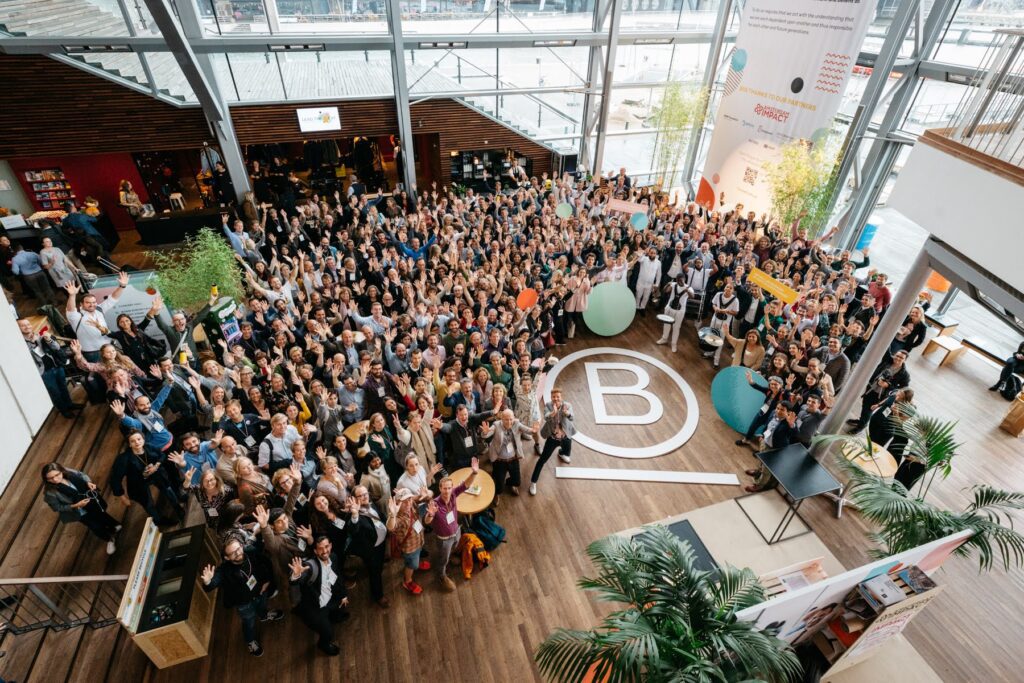
Through events, businesses like B Lab can fuel conversations and commitments that will carry forward beyond one single event. The B Corp Festival, Louder Than Words, is a shining example of using an event as a force for good. It brought together over 2,000 people for a purpose and brought the B Corp movement to life. Each voice contributed to a collective legacy, reinforcing the movement’s commitment to reshape business with purpose and impact.
This B Corp month, we spoke to Lucy Hall – Campaign and Events Coordinator at B Lab UK – about how B Lab design events that embody and advance their mission, create direct impact, and turn audiences into community members.
1. Can you tell us about your company’s mission?
I work for B Lab, the non-profit network transforming the global economy to benefit all people, communities and the planet. Specifically, I work for B Lab UK, the charity driving the B Corp movement in the UK. Certified B Corporations (B Corps) are companies verified by B Lab to meet high standards of social and environmental performance, transparency and accountability.
Our most pressing global challenges cannot be solved by governments and charities alone. Businesses are one of the most powerful forces in society. By harnessing that power, B Corps commit to creating positive impact for all stakeholders (workers, customers, communities and the planet) not just shareholders.
Today, the B Corp community is a global movement of more than 10,000 businesses across 103+ countries and 160+ industries, collectively employing over one million people. Together, they are proving that a better way of doing business is not only possible, it’s already happening.
2. What role do events play in advancing your mission?
Events are a critical part of how we build and scale the movement.
One side of our events portfolio focuses on community events that bring B Corps together, from B Socials to our brilliant events hosted through our B Local programme, which connects B Corps within their local areas. These moments create space for collaboration, shared learning and peer support.
But we can’t just talk to ourselves. To truly change the system, we need to engage beyond the B Corp community, with non-B Corp businesses, policymakers, think tanks, legal and financial institutions, and allied organisations.
B Corps are the proof point that stakeholder-led business works. The question is: how do we make that the norm? How do we level the playing field so all businesses are empowered, and expected, to consider people and planet alongside profit?
Currently, UK company law prioritises shareholder returns. Directors can consider employees, communities and the environment, but they are not legally required to do so. Yet public expectations of business have fundamentally shifted.
That’s where our policy work comes in. I work largely on our flagship campaign, the Better Business Act, which is calling for an amendment to Section 172 of the Companies Act 2006. This would update directors’ duties so that social and environmental impact is aligned with shareholder returns.
Our events drive the campaign forward. They connect our community, invite the outside in, convene policymakers and experts, and create space for meaningful dialogue. Most importantly, they mobilise people. Connection is what turns a network into a movement.
3. How do you translate your core message into live experiences, so that your events embody it?
For me, it starts with intentional design. Every choice should reinforce the message you’re trying to land, from speakers and venue through to the event format and catering.
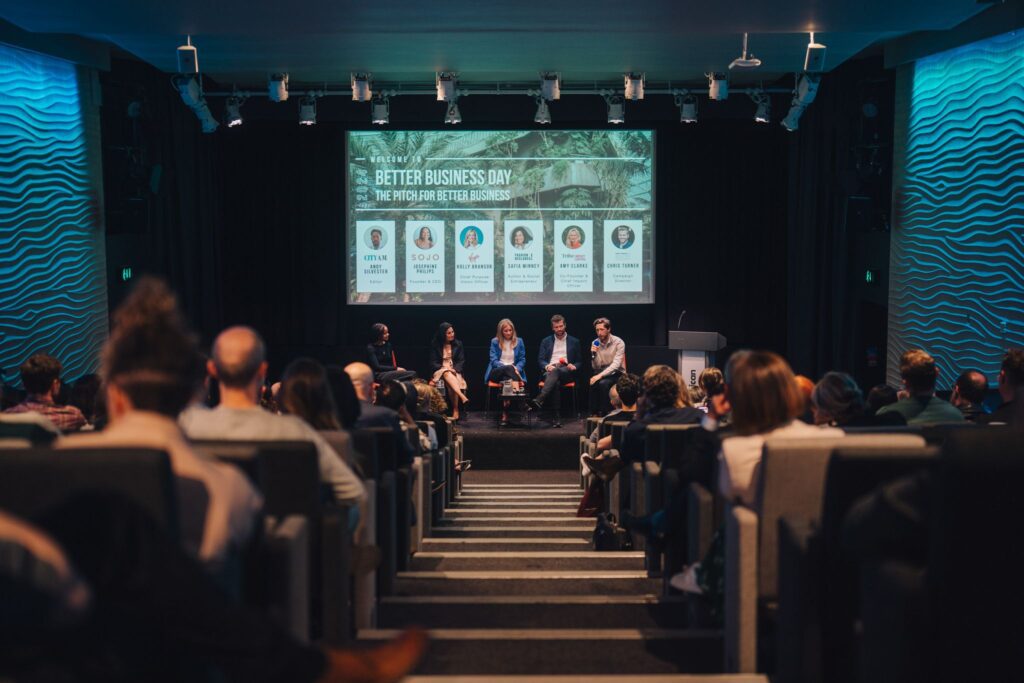
If we’re talking about systems change, the environment needs to reflect that ambition. For example, for our annual Better Business Day celebrations, we host events in Parliament because we are advocating for legislative change. The setting reinforces the seriousness and urgency of our campaign.
But embodiment goes beyond symbolism. We prioritise sustainable catering, accessible venues and inclusive programming. We ensure diversity of perspective across speakers and attendees.
We ask ourselves constantly: are we practising what we preach? Our events must bring the values of our organisation to life.
4. Has there been a specific positive impact created from an event that you are proud of?
One standout moment was following Better Business Day, when MPs signed an Early Day Motion in support of the campaign and the proposed legal change.
Seeing MPs publicly back the Better Business Act was incredibly powerful. It helped raise awareness in Westminster and demonstrated growing political momentum.
Sometimes events can just feel like a moment in time. This event translated into something very real. It was a powerful reminder that convening people in the right room at the right time really can move the dial.
5. How do you integrate sustainability into your events to create a positive impact?
Sustainability has to be built into decision-making from the start.
I’ve developed a venue selection matrix that helps us assess spaces not just on logistics like AV capability, but on alignment with our values, considering accessibility, sustainable catering options, and whether they’re a B Corp or a friend of the movement.
We use reusable name badges and repurpose materials wherever possible. We also have a buildable installation known affectionately as “the Big B,” which has become something of an icon at our events and avoids the need for single-use display builds.
6. Do you have any tips for engaging attendees to become part of your community and story rather than just a passive audience?
Give people something meaningful to do.
Particularly at Better Business Act events, there is always a clear action. If attendees aren’t yet part of the coalition, they can join. If they are members, they can amplify their support on social media, write to their MP, host their MP at their business or collaborate with others in the room.
We also organise MP site visits to B Corps in their constituencies. For example, following a visit to Stroud Brewery, local MP Dr Simon Opher took the campaign into Parliament, tabling a question to the Secretary of State for Business and Trade, asking what the government is doing to get businesses to act in the public interest. That’s tangible impact sparked by connection.
If someone has taken the time to travel to your event, there should be a clear incentive; an action they can take, a commitment they can make, a way to contribute. That’s how you build a movement rather than an audience.
We also prioritise diverse voices across panels and keynotes. When people see themselves reflected in the story, they’re more likely to step into it.
7. If you could inspire one change in the way businesses host events, what would it be?
Make more space for real dialogue, especially Q&A. In my view, that’s the part of an event you can’t replicate in a write-up or report. Hearing experts respond to challenging, unscripted questions in real time is where the energy shifts. It’s often where the most honest, provocative and “wake-up” moments happen.
If we want events to drive change rather than just broadcast ideas, we need to create space for conversation, not just content.
Related insights
Broadsword awarded highest climbing sustainable agency
![]()
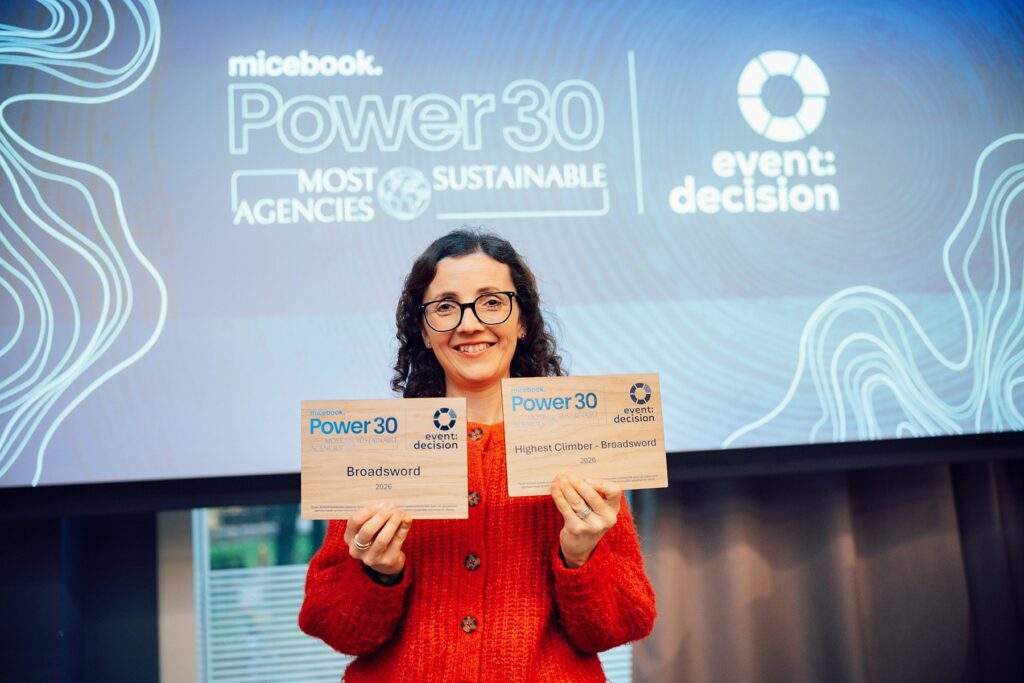
Broadsword awarded highest climbing sustainable agency