Why digital-first brands are moving marketing offline
SHaPe: Why Creativity Needs Stimulus
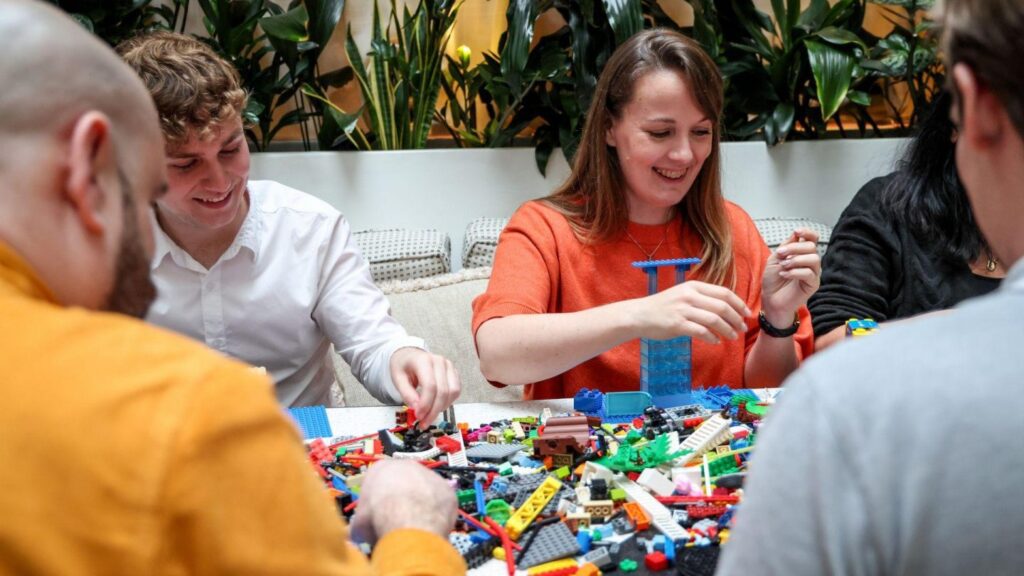
As Creative Director of leading events agency, Broadsword, Martin Walton developed the SHaPe framework to develop creative thinking without depending on AI to give you ideas. Stimulus is the first and perhaps most essential part of the SHaPe formula for creativity. However, in today’s digital world, where your brain is constantly processing information and consuming content, making the space for creativity is crucial.
Why creative thinking needs stimulus
Without stimulus, ideas have no starting point.
In other words, creative ideas rarely appear on their own. Experiences, environment, observations, emotions, new perspectives and insights all can help teams challenge familiar thinking.
The challenge is not simply to generate ideas (now that generative AI is around), but to find inspiration that leads to meaningful experiences.
“Imagine if you were born into a completely empty white room. No music, books, art, or conversation. Just blank walls and the distant hum of nothingness. Like a lonely lemon sitting in a fridge. Brrr. Creativity isn’t born in a vacuum – it’s the direct result of everything we absorb from the world around us. Stimulus is the fuel of creativity, and essential to the SHaPe formula for creative thinking. It’s everything we see, hear, touch, taste, and experience. This could be the film that made you cry when you were thirteen, listening to a song for the first time (or for the hundredth time), the smell of your grandmother’s kitchen, the city that felt like home the moment you stepped into it. Basically, everything that makes you stop and think, or better yet, makes you feel something”.
Why IRL is more important than ever
In an age where we are bombarded with digital content, real-life experiences — the things we touch, smell, hear, and taste in the physical world —are more important than ever. Digital stimulus is quick, convenient, and infinite, but it’s also fleeting.
Event planners know the power of IRL. True inspiration often comes from the things that require presence, curiosity, and engagement.
Think about the last time you felt truly inspired. Was it scrolling through an endless feed of algorithm-driven content? Or was it a meaningful conversation with someone?
Where to Find Creative Inspiration (Hint: Everywhere)
• People – Every person you meet has a different story, a different perspective. Talk to them. Ask them questions. See the world through their eyes.
• Places – Go somewhere new. It doesn’t have to be a different country; even a different street can change your perspective.
• Art & Culture – Films, books, theatre, live music, street art—anything that makes you pause and react.
• Nature – The patterns in leaves, colours of a sunset, stillness of a forest—all of it feeds creativity.
• Challenges – The things that disrupt your normal way of thinking, whether it’s learning a new skill or simply putting yourself in an unfamiliar situation.
How to Use Stimulus Intentionally
Absorbing stimulus is one thing, but using it effectively is another. The best creatives don’t just passively consume—they actively engage. They ask, “What does this make me feel? Why does this resonate with me? How could this idea evolve into something else?”
One of the best ways to sharpen your creativity is to collect and reflect. Keep a notebook, a digital archive, or even a messy folder of screenshots filled with things that spark something in you. Revisit them. Remix them. See what patterns emerge.
Stimulus vs. Overload
It’s easy to assume that more input equals more creativity, but there’s a tipping point. Too much noise can drown out original thought. So, if your brain is constantly processing information and consuming content, when does it get time to create?
That’s why balance is key—taking in the right kinds of stimulus without getting lost in an endless loop of passive consumption.
Creativity isn’t about waiting for ideas to strike. In contrast, it’s about curating the experiences, conversations, and moments that fill your mind with possibilities. And that’s why SHaPe begins with Stimulus—without it, the rest of the formula falls flat.
“So go. See something new. Listen to a new song, read something that challenges you, go to an event, or talk to someone whose worldview doesn’t match your own. Because your next great idea is out there, waiting to be discovered”.
And if all else fails? Stand outside and just watch the world happen for a while. You might be surprised at what you find.
Next, explore Headspace—because once you’ve gathered the right stimulus, you need to give your brain the room to do something with it.
Related insights
The Step-By-Step Guide to High-Impact Event Strategy
![two women at corporate event in conversation.]()

The Step-By-Step Guide to High-Impact Event Strategy