
Designing events for trust
Engage and Lead Through Change: How to Communicate with Intention
When change happens within an organisation, it’s easy to send out a blanket update to your entire workforce. Especially when your people span hundreds or thousands of employees across the globe, it can seem impossible to create intimacy or ensure every individual feels understood.
More often than not, a broadcast from HQ is pushed through multiple channels in the hope that the message lands. But this is a common pitfall in change communications — if the tone or language miss the mark, the message risks engaging no one.
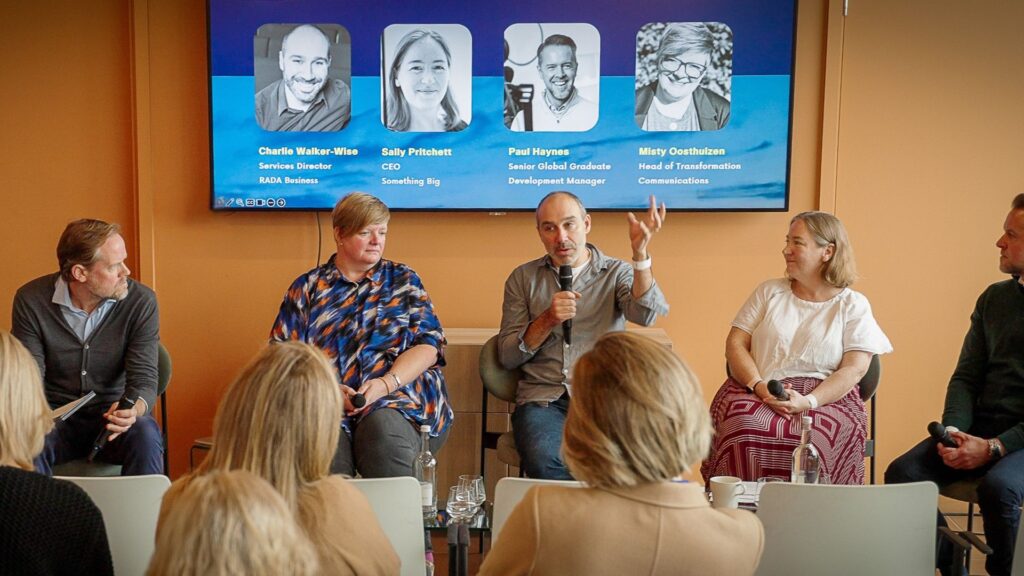
At B.inspired: Engage and Lead Through Change, Broadsword’s event for communications professionals, the panel explored how to create more intentional, purposeful communications that unite a workforce rather than overload it.
Speakers emphasised the importance of building time for two-way dialogue. When employees feel that news is “sprung” on them, conversation will inevitably shift outside internal channels and into the public domain. For example, a recent high profile news story broke concerning a high street retailer who had mandated that employees must now work on Boxing Day. The resulting negative press with employees bemoaning the change could have been avoided or minimised with a different approach. Leaders could have invited feedback: who might be open to this change in exchange for an alternative perk?
The panel suggested developing employee personas to better understand what motivates different groups — whether it’s training opportunities, recognition, or making a meaningful impact.
Communications leaders, they agreed, don’t just need the skill to present information — they need the ability to create experiences that connect and resonate. Storytelling builds empathy, aids learning, and encourages behavioural change. Yet when organisations try to “suit everyone,” their messages can become sterile. The most engaging internal experiences are those that use creativity and authenticity to bring core messages to life.
A standout example came from RADA Business and Broadsword, who collaborated on a leadership experience using a method called ‘Verbatim Theatre’. Actors performed real stories collected from employees across a global business — transforming what would usually be survey data into a deeply human, emotional dialogue between leaders and teams. It gave employees a voice and inspired leadership to act on what they heard.
Change communications fall flat when leaders assume they already know what people think. The most powerful communications bring people into the change, creating credibility and connection. When leaders “sweat the small stuff” — actively listening, acknowledging concerns, and showing empathy — people feel seen, safe, and ready to contribute.
How to Communicate Change with Impact
-
Design for dialogue, not broadcast. Build in opportunities for feedback, questions, and conversation.
-
Understand your audience. Use personas or listening sessions to tailor messages to real needs and motivations.
-
Tell stories, not updates. Share authentic narratives that connect data to human experience.
-
Make change participatory. Invite people into the process so they feel ownership, not imposition.
-
Bring it to life through experience. Use creative formats — theatre, workshops, or live events — to make change tangible.
-
Listen and respond. Active listening and visible follow-through build trust and psychological safety.